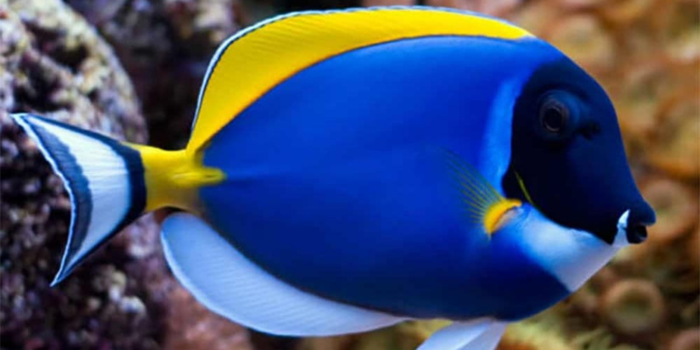
White spot disease, also known as marine ich (caused by the protozoan parasite Cryptocaryon irritans), is a serious concern in marine aquariums. It manifests as small white spots on the fish’s body, fins, and gills, and can lead to significant stress, health decline, and even death if not treated promptly.
Why Powder Blue Tangs are Susceptible
Powder blue tangs (Acanthurus leucosternon) are particularly susceptible to marine ich for several reasons:
- Stress Sensitivity:
- Powder blue tangs are known to be very sensitive to changes in their environment. Stress from transportation, acclimation, or changes in water parameters can weaken their immune systems, making them more susceptible to infections like ich.
- Thin Mucus Layer:
- These tangs have a thinner protective mucus layer on their skin compared to some other fish species. This makes it easier for parasites like Cryptocaryon irritans to attach and infect them.
- Behavior and Habitat:
- In the wild, powder blue tangs inhabit areas with strong water flow and plenty of hiding places. In captivity, they often don’t have the same level of environmental enrichment, which can increase stress and susceptibility to diseases.
Prevention and Control of Marine Ich
Prevention
- Quarantine New Fish:
- Always quarantine new fish for at least 4-6 weeks before introducing them to the main tank. This helps ensure they are not carrying ich or other diseases.
- Stable Water Parameters:
- Maintain stable water conditions with proper temperature, salinity, pH, and low levels of ammonia, nitrite, and nitrate. Sudden changes can stress fish and make them more susceptible to diseases.
- Stress Reduction:
- Provide a well-aquascaped tank with plenty of hiding spots and adequate space to reduce territorial disputes and stress among tank inhabitants.
- Good Nutrition:
- Feed a varied and balanced diet to keep the fish healthy and their immune systems strong.
Control and Treatment
- Copper Treatment:
- Copper-based medications are effective against ich but can be toxic to invertebrates and some fish. Use in a quarantine or hospital tank, not in the main reef tank.
- Hyposalinity:
- Lowering the salinity to around 1.009-1.010 specific gravity in a separate treatment tank can be effective against ich. However, this method can stress some fish and is not suitable for invertebrates.
- UV Sterilization:
- Installing a UV sterilizer in your main tank can help reduce the number of free-swimming ich parasites by killing them as they pass through the sterilizer.
- Tank Transfer Method (TTM):
- This involves transferring fish between different tanks every few days to interrupt the life cycle of the parasite. It’s labor-intensive but can be very effective.
- Medicated Foods:
- Medicated fish food can help treat internal infections and boost the fish’s immune system, although it’s usually less effective against external parasites like ich.
- Reef-Safe Medications:
- Some treatments are marketed as reef-safe, but their effectiveness can vary. Always research and follow the manufacturer’s instructions carefully.
Monitoring and Follow-Up
- Observation: Continuously observe your fish for signs of ich, especially after adding new fish or making changes to the tank.
- Regular Maintenance: Keep up with regular tank maintenance, including water changes, substrate vacuuming, and filter cleaning, to ensure a healthy environment.
- Consultation: Seek advice from experienced aquarists or a marine veterinarian if you’re unsure about treatment options or if ich persists.
In summary, white spot disease is dangerous and potentially deadly for marine fish, especially sensitive species like powder blue tangs. Prevention through quarantine, stress reduction, and stable water parameters is key. If an outbreak occurs, prompt and appropriate treatment using methods such as copper treatment, hyposalinity, or UV sterilization can help control and eradicate the parasite.
